
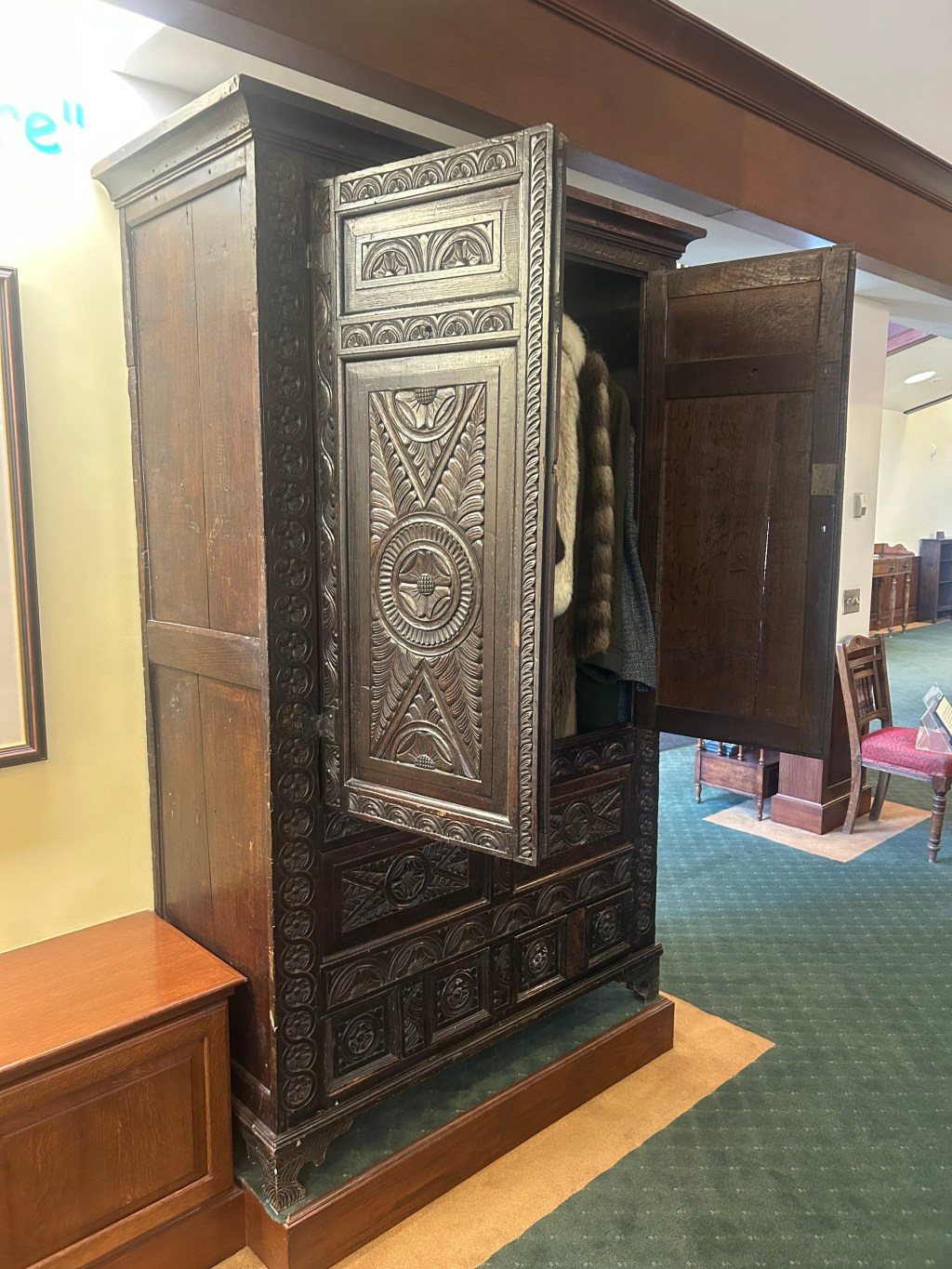
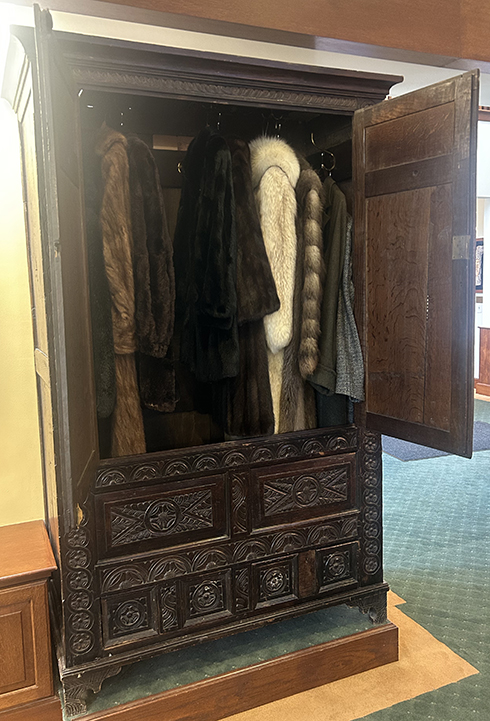
Standing against the wall in a small cottage in Wheaton, Illinois is an old wardrobe. It’s made of oak and hand carved. A few old coats hang in it and no one minds if you take a picture, touch it, or open and shut its doors. But if you tried to climb inside I imagine you’d get into trouble. You see, it’s a special wardrobe and it once contained an entrance to a special place. Around eighty or so years ago, it held a portal to the land of Narnia.
“Where is Narnia?” you ask. Narnia is in a fairy-tale land where fauns and beavers, witches and kings live and work and play and sometimes have epic battles. It’s a place where children can visit and escape the awfulness of life in the real world. A place where they go on quests, find adventure, and discover what it means to have courage, to risk everything for something bigger than themselves.
When C. S. Lewis wrote the story, he and J. R. R. Tolkien were great friends. Tolkien was writing about hobbits and wizards and rings, while Lewis wrote about children and talking animals. Their stories were alike in some ways, but in many ways they were different. Tolkien thought his friend Jack, as he called Mr. Lewis, should not write in allegory. Lewis, on the other hand, was moved to tears when reading Tollers’ (his name for Tolkien) stories. But no matter how each of the friends chose to write their tales, both stories had one very important commonality. Both stories stirred what Mr. Lewis described as Longing.
The friends discussed this Longing. They realized that it’s present in each of us, that as mortals we are never completely satisfied in this life. We long for something more. Tolkien realized that the best stories give us a glimpse into a joy that we cannot fully experience on this earth. He called that “sudden happy turn toward joy at the end of a fairy story” a “eucatastophe.”

Lucy, in the Chronicles of Narnia, read a story in The Magician’s Book which she described as “The loveliest story I’ve ever read or ever shall read in my whole life.” But, upon turning the page, she couldn’t remember what she had read. Afterwards, stories that reminded her of the forgotten story from The Magician’s Book were the stories she considered the best ones.
This understanding of Longing and the realization that even the stories of secular writers “show that Longing is never completely satisfied in this world,” brought C. S. Lewis to finally begin to move toward the Christ of the Christian faith. He realized that the essence of Longing and the “eucatastophe” of the best stories are universal. He saw that all of us yearn like Reepicheep in Narnia, for the beauty of the “World’s End” or like the elves for “Valinor” in the Lord of the Rings trilogy.
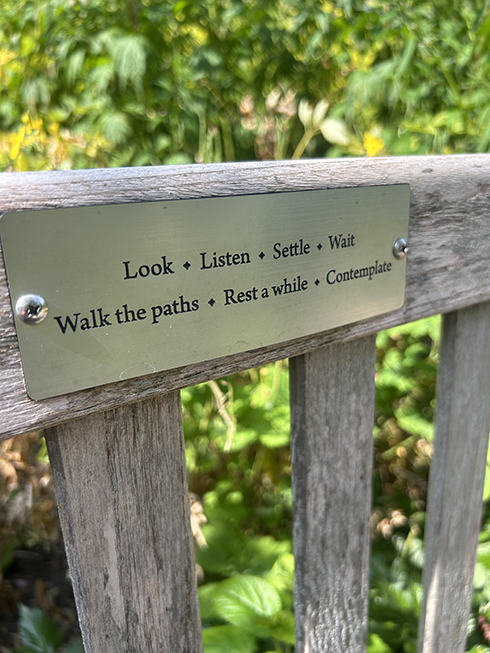
Standing in front of the wardrobe in the quiet of the Wade Center, I thought about why we write, why we create, why we compose. I pondered why we as humans are compelled to create beauty. I believe the Longing that C. S. Lewis described is the answer.

My reason for being at Wheaton was to attend a writer’s conference. For an entire week I was able to gather with creatives from all over the world. We were there to listen, learn, and talk about what it means to write, whether creating a world of fiction or a book of facts.
We listened to speakers like Tim Challies, who charged us to see suffering in our lives “as a gift given to us by God in trust.” He called us to responsibility. “A writer’s task,” he said, “is to do good for others for the glory of God…to put experiences into words…do what others may not be able to do.” We are to “faithfully steward sorrow.” Writing, he said is “service.” He admonished us to “write out of the best and the hardest days of our lives.”

Dr. Saundra Dalton Smith encouraged us to “Write from a place of beholding, becoming, belonging.” She told us to “linger in the moments…don’t treat God like a ‘drive-by’…to ‘Be still and know God.’” She told us that “Becoming is not about becoming something new, it’s about becoming more of who we’re meant to be.” It’s about the Hebrew word Hineni which means saying “Here I am, send me. Now, what’s the question?” to God.
Such a week of soaking it all in. Now, we have come home and the work begins. Dr. Saundra gave us questions to ask ourselves. “Where am I in my becoming journey and how might that journey show up on the page? How is my sense of belonging shaping the way I share my story?” For you see, writing is not only about making things up, it’s really about bringing a bit of truth into clearer focus through the vehicle of story. And we all have stories. We all need stories.

C. S. Lewis believed that the best children’s stories were the ones that could be read again and again. He believed a children’s book should be written in such a way that adults would get as much delight from it as a child. He was a great proponent of children’s literature and fantasy, not as an escape, but as a way of encouraging us to make the real world a little bit enchanted.
We could use a bit of enchantment in the awfulness of this world. We could use more good stories. Stories to make us crave finding the courage to risk all for something bigger than ourselves. As writers, we have the great privilege of realizing that something as simple as a wardrobe might be all it takes to inspire us to catch the excitement, catch that glimpse of joy, and stir that Longing to life in someone’s world.
To that writer in all of us,
Blessings!
The Wade Center Podcast S 7, E 12, Aired June 16, 2025, C. S. Lewis’s Oxfordw/Dr. Simon Horobin
J.R.R. Tolkien and the Arts a Theology of Subcreation
Faithandculture.com Friendship and Conversation-Tolkien and Lewis by Kevin O’Brien January 17, 2021
Dancingpenbooks.com Tales of Hope, The Wartime BBC Broadcasts of C. S. Lewis by Rick Nau
Psalm 46:10
Write to Publish Conference 2025, Wheaton College, Wheaton, IL
Marion E. Wade Center, Wheaton College, Wheaton, IL
The Voyage of the Dawn Treader by C. S. Lewis, © 1952 by C. S. Lewis (Pte) Limited, HarperCollins Children’s Books, a division of HarperCollins Publishers


 Are We There Yet?
Leave a reply to Beverly J Smith Cancel reply